TOBIAS BRAUNGuitars · Gaaden bei Mödling
Classical & Flamenco Guitars

"I go into the forest and select a tree that will eventually result in a guitar top."

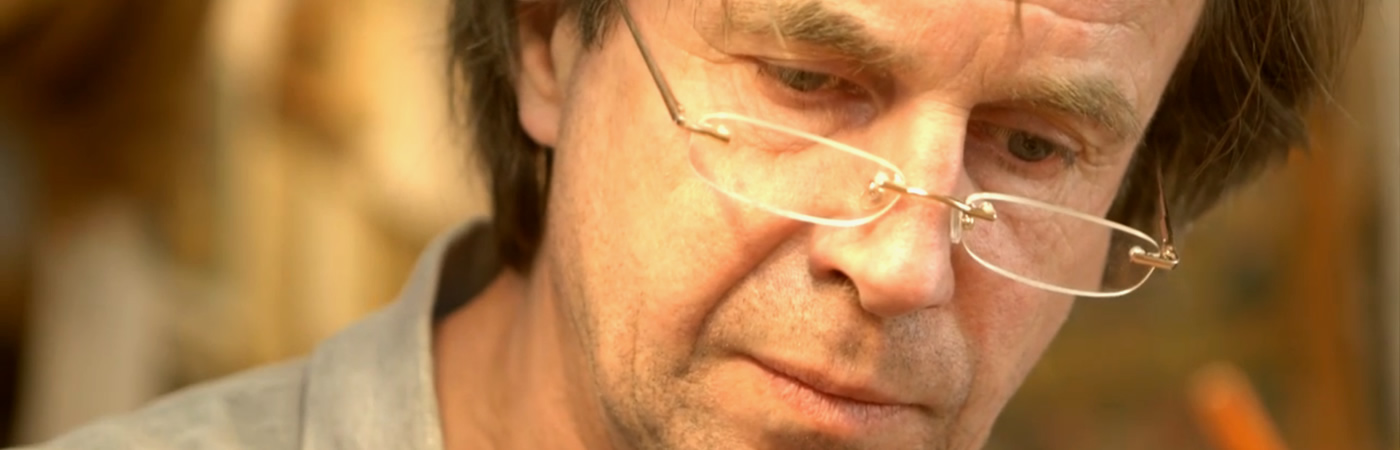
Tobias Braun is fascinated by the homogeneity of the artisanal process.

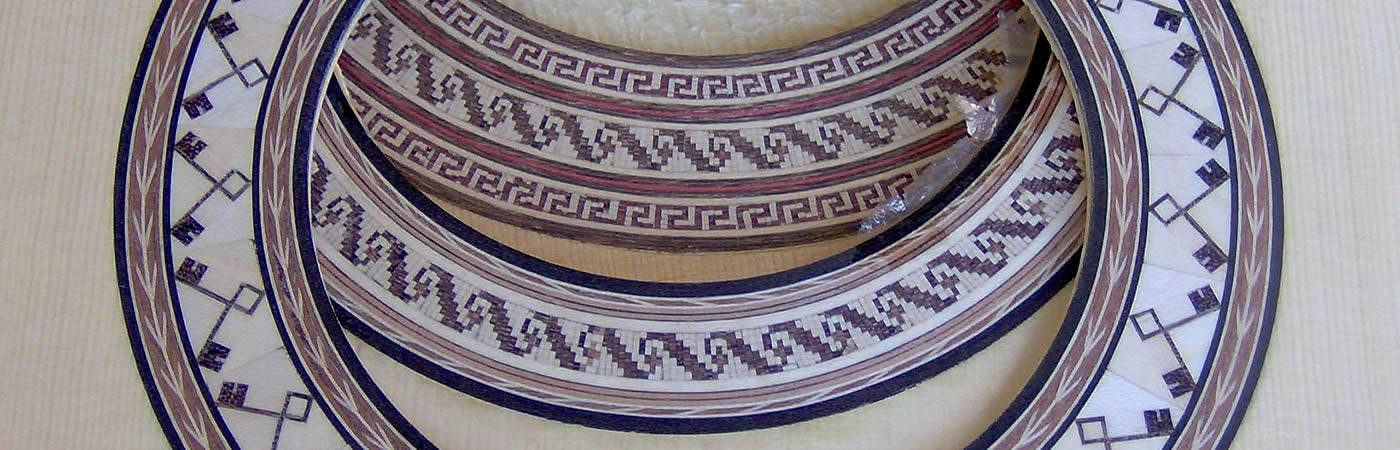
Hand-made inlay strips
01   Platetobiasbraun-guitars.com
The Guitars · 02–08

Tobias Braun Guitars

Before I comment on specific instruments in terms of their sound and historical significance, I would like to point out that I have only ever built instruments based on famous “original” instruments, particularly those made by distinguished Spanish Masters.

In terms of my Classical and Flamenco Guitars, my guitars not only reflect the overall tradition of the Spanish Guitar Makers, but always include specific construction details of the individual “originals” on which my instruments are based.

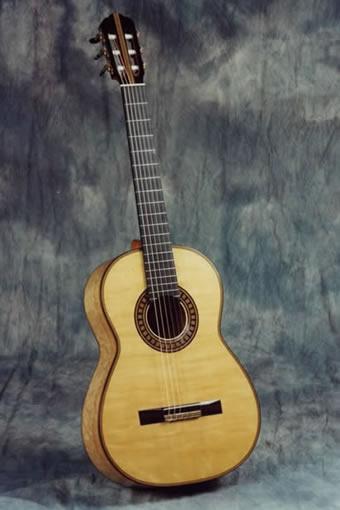
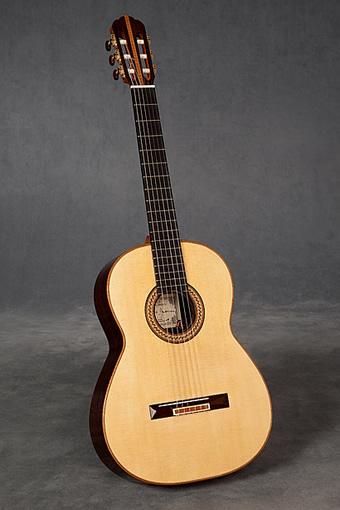
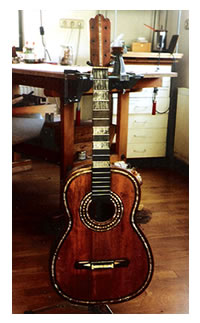
Manuel Ramírez, 1912
02

Manuel Ramírez, 1912

Bearclaw Spruce/Satin Wood

The body of this guitar, compared to others I have researched, could be described as rather delicate, which belies the sheer volume and carrying power of the sound. This instrument has a fast response and produces a formable and transparent sound rich in tone colours.

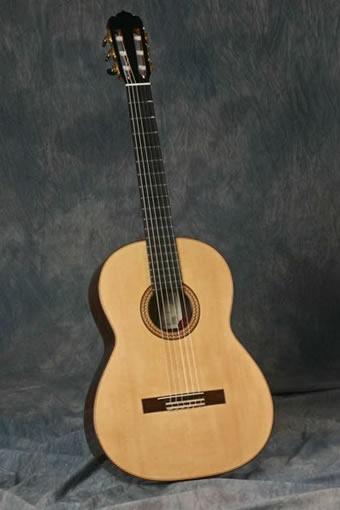
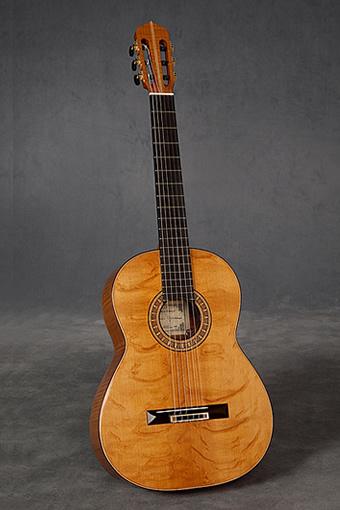
Santos Hernández, 1924
03

Santos Hernández, 1924

Spruce/Indian Rosewood

This instrument was part of the estate of the late Luise Walker (1988). Her teacher, Miguel Llobet, personally brought this guitar direct from Santos Hernández’s workshop to Vienna in 1924. The body of this instrument is really the antithesis of the 1912 Ramirez in terms of its dimensions. The larger resonance body gives it somewhat more warmth to the sound in the bass.

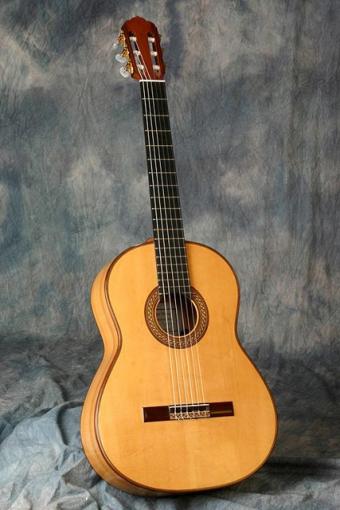
Manuel Reyes, 1989
04

Manuel Reyes, 1989

Spruce/Cypress

I use this design for flamenco guitars as well as for classical instruments with Cedar tops.

Tobias Braun 2007
05

Tobias Braun 2007

Satinwood (West Indian - fagara flava)

This is a stiff and heavy wood highly suitable for guitar bodies which Tobias has good experience of. At the same time it is very attractive particularly after it darkens with time, revealing more the characteristic figuring.

Tobias Braun 2007 Thermowood
06

Tobias Braun 2007 Thermowood

Thermowood

Beautiful look and produces a formable and transparent sound, rich in tone colours.

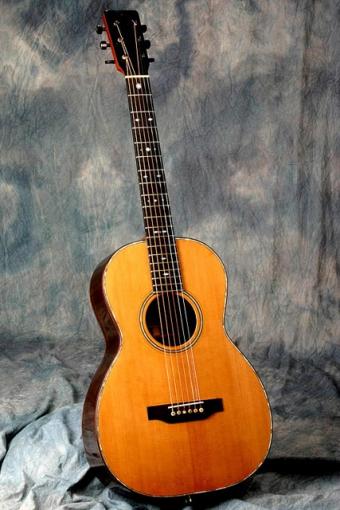
Martin 00-21
07

Martin 00-21

Sitka Spruce/Indian Rosewood

The most fascinating about this instrument is its balanced sound. For a steel-string guitar, it has a really delicate body, but the basses and trebles are still very well balanced. Its transparency and the broader fingerboard make it ideally suited to finger-picking and bottle-neck players. The neck joins the body at the 12th fret – as it is with the original.

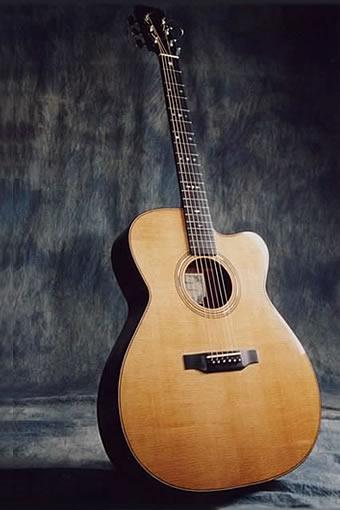
Martin M-36
08

Martin M-36

Sitka Spruce/East Indian Rosewood

This instrument too has a fast response and a well-balanced sound. It differs from the Martin 00-21 in that it boasts characteristics of a “standard” steel-string Guitar: larger body, narrow finger-board and the neck join at the 14th fret.

[Dummy — recordings, prices and availability are not published on the live site]

Material · 09

Woods

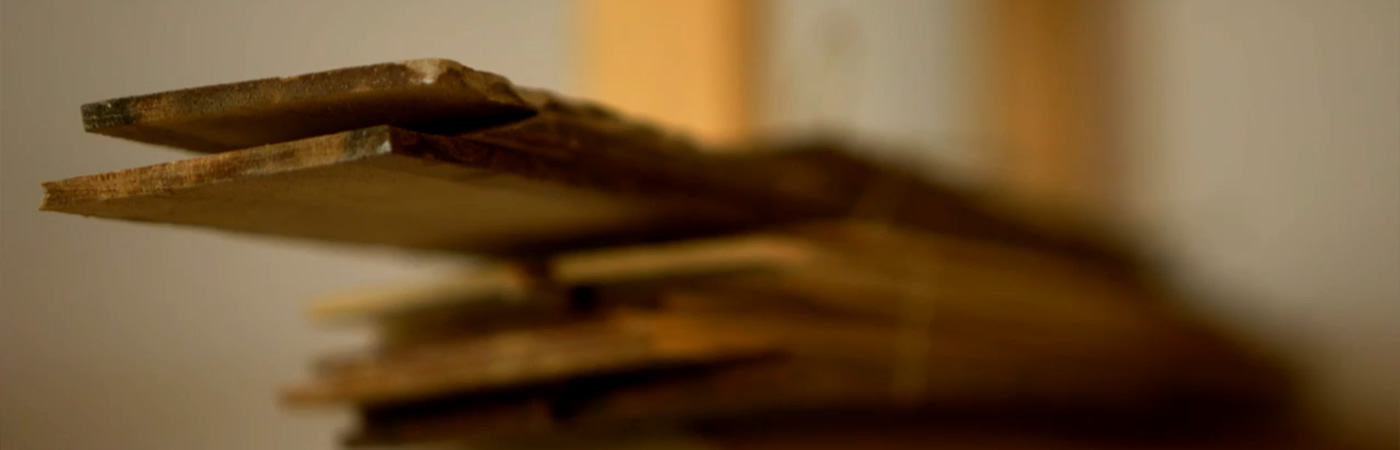
Air-dried wood stock
09   PlateWoods

Woods

All my woods are naturally air-dried. In 1988 I started buying and storing wood - sometimes whole trees - which means I have ready access to a large, varied and well-aged stock of woods.

The Soundboard

I almost exclusively use Spruce from the Austrian Alps and the Bohemian Forest for the soundboards. I have a particular preference for Bearclaw Spruce which I have been working with for many years.

Back

The wood I use mostly for constructing the backs of the guitars is East Indian Rosewood. Other woods in this price class I can offer are flamed or bird’s-eye maple, or yew (in limited quantities) as alternatives to Rosewood. For more expensive instruments I can offer the choice between Brazilian Rosewood and Ziricote.

The neck

Here I can offer the choice between South American Cedar (Cedro) and Honduras Mahogany.

The Fingerboard

The standard fingerboard is Ebony.

17mm

Construction Details

Over the years of my association with the Spanish guitar, I have often come across the so-called “tornavoz”, a metal conical megaphone-like structure fitted to the inside of the sound hole extending a few centimetres into the instrument.

My “variation on this theme” is a wooden ring fitted to the inside of the sound hole extending about 17mm (2/3rds of an inch) into the instrument. This has a substantial effect of the sound without limiting access to the inside of the body for repairs.

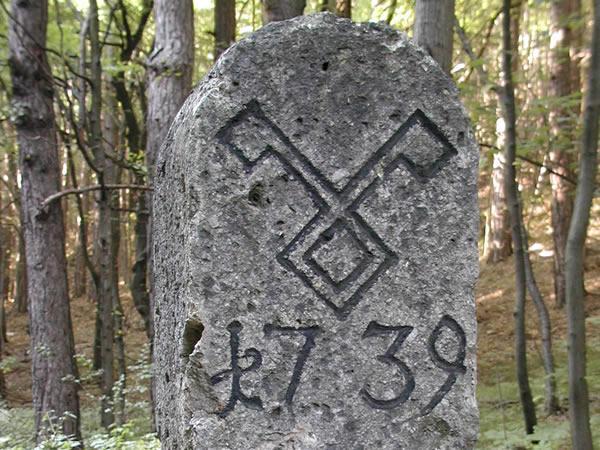
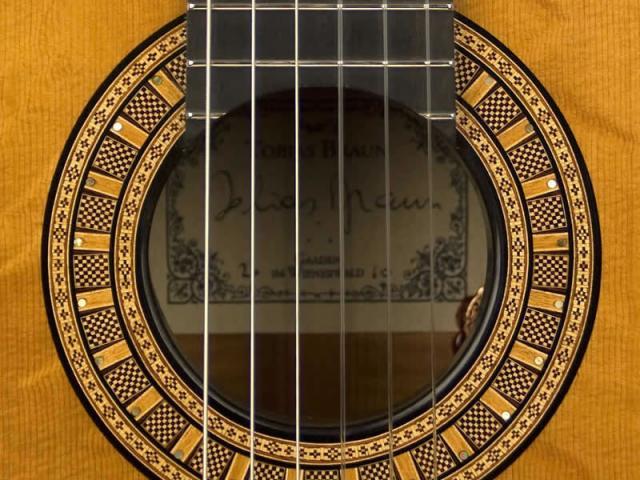
Boundary stone from 1739Rosette with the Key motif
10

The Rosette with the “Key” Motif

The design for my one of my rosettes relates to a regionally historical motif. On the street where I live there is a boundary stone dating back to 1739, which depicts a pair of crossed keys.

I offer a lifetime guarantee on the woods and workmanship of my guitars.

Special Models

Special Models

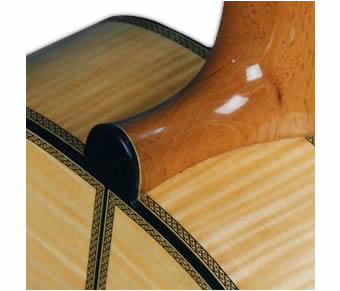
Collector series guitar detail

„Collector´s series“

On request, I build highly sophisticated Classical Guitars with detailed, ambitious ornamentation. An example of such a detail is the hand-made purfling which I fit to the edges of these guitars, as well as the rosette, bridge and head which can all be embellished.

Asymmetrical 10-string Guitar

My Japanese dealer, Eisuke Ozaki, came up with a very good idea for improving the playability of the broad 10-string fingerboard. He suggested “shifting” the neck “upwards”. This I do by joining the neck to the body in a way that the median line of the broader fingerboard is shifted 10mm away from the median of the body in the direction of the bass-strings.

Biography

Tobias Braun

Tobias Braun
  1. 1960

    I was born in Holzminden/Weser, Germany in 1960.

  2. 1983

    During the course of 1983, having taught myself, I made my first Classical Guitar.

  3. 1984

    A year later, I attended my first guitar-making course under the tutelage of José Luis Romanillos, learning in those three weeks what most people take three years of apprenticeship to acquire.

  4. 1989

    1989 was quite an eventful year - I not only received my Master Craftsman’s Certificate in Vienna, but also attended a third course with José Romanillos, this time in Córdoba, Spain.

  5. 1993

    1993 was a very important year in my career, which began with a week-long training course at Gibson in Nashville, Tennessee. That summer I worked as J. Romanillos’ assistant during his Guitar Makers’ Course in Córdoba.

  6. 1998

    In 1998 I moved to my new house and workshop in Gaaden, situated near Vienna in the Vienna Woods.

  7. 2000

    Since the summer of 2000 I have been working together with the American Guitar Dealer, Miklaucic (Guitar Salon International) in Santa Monica, California.

Guitar making started as his hobby when he was in his very early Twenties. For one and a half years Tobias Braun followed books and tried to make guitars in the self-taught-way. In 1984 Tobias Braun attends the very first guitar making class by José L. Romanillos in Zürich. These three weeks formed the acoustical and aesthetical basis of his guitars.

Some of my instruments are played by these artists:

  • Martin Schwarz (A)
  • Paul Friesenbichler (A)
  • Prof. Leo Witoszynsyj (A)
  • Erich Schachtner (D)
  • Y. Iwanaga (JP)
  • Keishi Sumi und Akiko Sumi (JP)
  • Prof. Martin Myslivecek (CZ)
  • Daniele Russo (I)
  • Dominik Apfelthaler (A)
  • Michael Hintersteininger (A)
  • Jan Depreter (B)
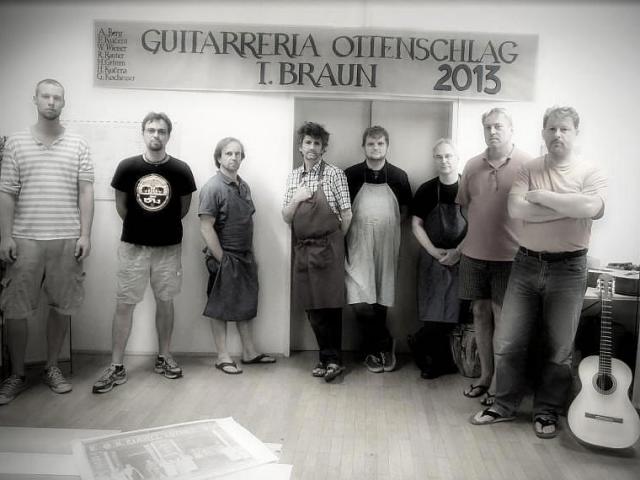
Guitar making course group
Guitar Making Course · Ottenschlag/ Austria

Build your own Guitar!

This year's guitarmaking course will cover the special building technique used by the famous Spanish guitarrero Santos Hernández. It will take place from July 13th-27th, 2025 in the village of Ottenschlag/Austria. Please contact me for more information.

[Dummy — 2026 course dates — not yet on the live site]

Contact
Publications · Lectures

Publication - Lectures

Currently, I am offering to present the following Lectures:

XI

The Restoration of a Spanish Factory- Made Guitar (around 1900)

…that which I initially regarded as a matter of straightforward craftsmanship increasingly revealed itself to be a small but, in terms of the history of Spanish Guitar Making, significant saga reminiscent of a Sherlock-Holmes mystery.

This presentation lasts 75-90 minutes (including illustrations)
XII

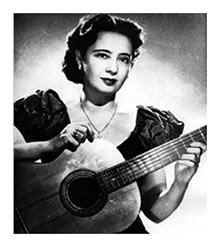
The Viennese Guitarist Luise Walker and her Santos Hernandéz Guitar

The guitar Luise Walker played is held by experts as the most beautiful surviving “Santos”. After Ms. Walker’s death I had the privilege of thoroughly researching and measuring this instrument within the context of repair work.

This presentation lasts 60 minutes (including illustrations)

"One of the best Central European makers we've seen to date. He uses spectacular materials including gorgeous German spruce which is covered in bearclaw markings and has irregular, yet tight and beautiful grain patterns..."

Guitar Salon International, Santa Monica CA
Contact

Contact / Journey

Address
Sittendorferstr. 16b
A- 2531 Gaaden bei Mödling

Directions

From Vienna take the A2 Autobahn south – then take the A21 – after about 3 kilometres take the Hinterbrühl turnoff.

Full directions